Hiatal Hernia Repair:
Restore Anatomy, End Reflux
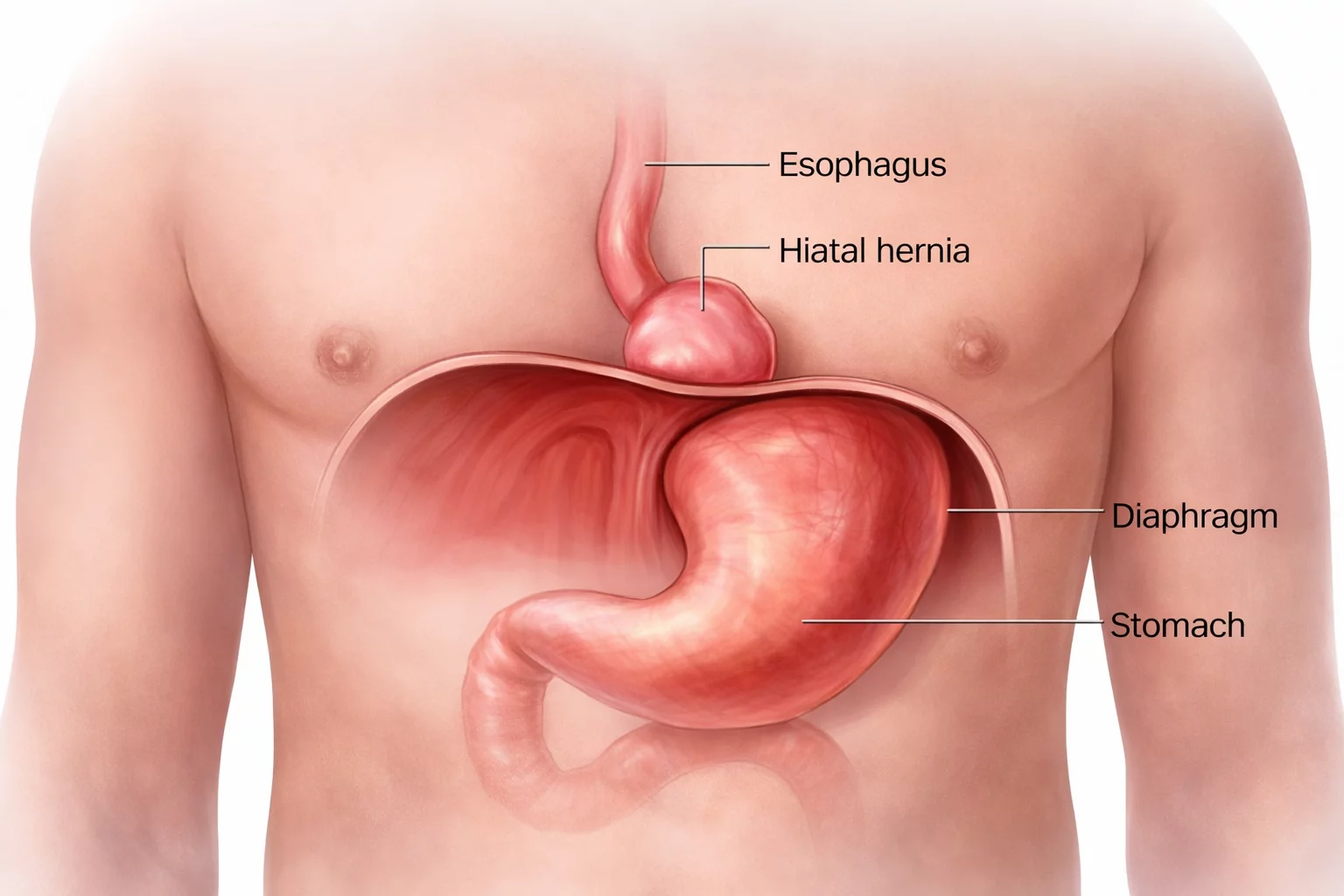
A hiatal hernia occurs when the upper part of the stomach pushes through the diaphragm into the chest cavity, weakening the natural anti-reflux barrier. Dr. Ahmed Kamal performs minimally invasive laparoscopic repair to restore normal anatomy, permanently relieve chronic reflux, chest discomfort, and difficulty swallowing, and improve overall digestive health.
What Is a Hiatal Hernia?
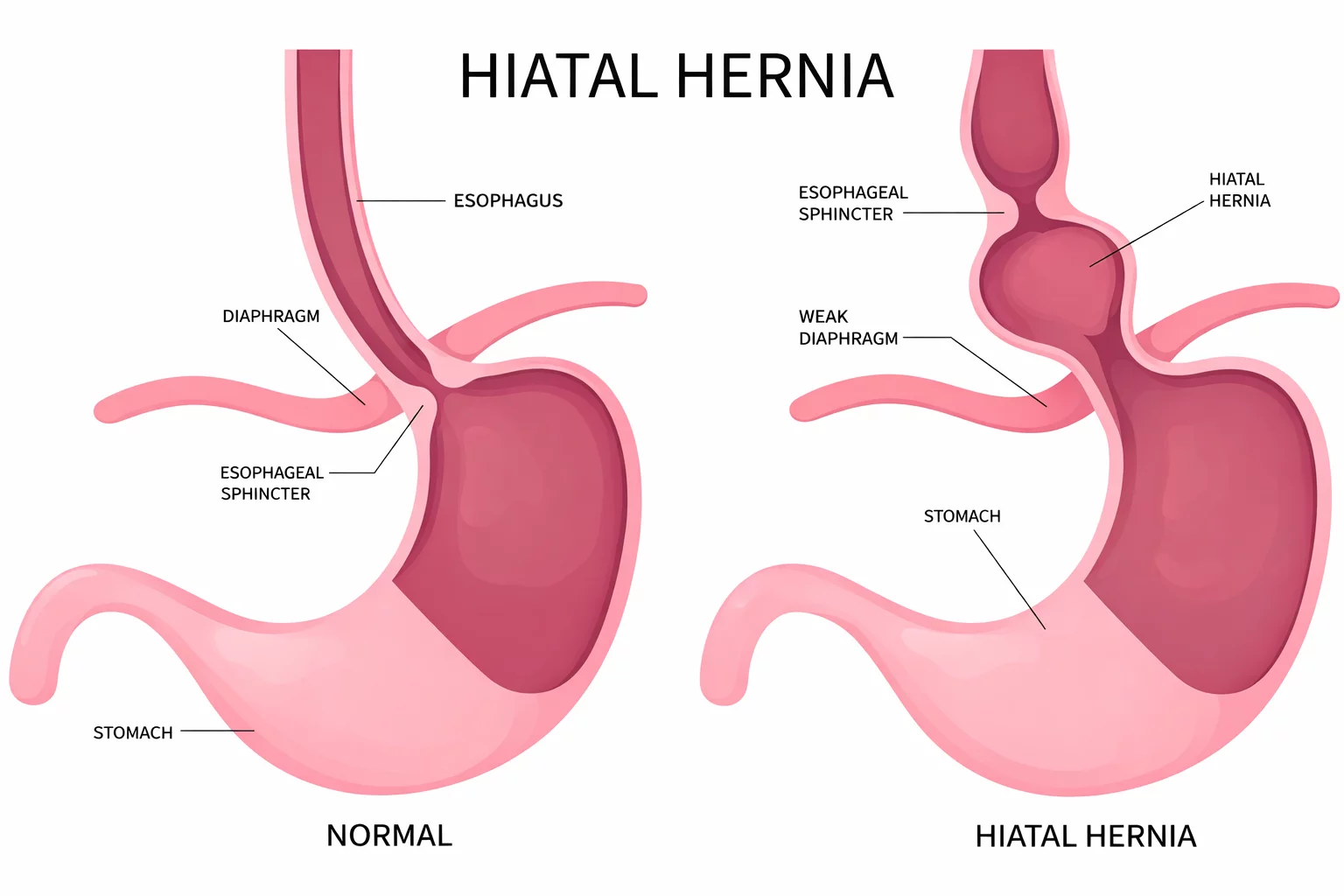
The diaphragm separates the chest from the abdomen and has a small opening called the hiatus through which the esophagus passes to reach the stomach. When this opening becomes weak or enlarged, the stomach can slide upward into the chest, creating a hiatal hernia.
This causes the lower esophageal sphincter (LES) to become ineffective, allowing acid to flow back into the esophagus, leading to persistent reflux that may not respond to medication.
Four Steps to Lasting Relief
-
Reposition the Herniated Stomach – The stomach that has pushed through the diaphragm is carefully identified and gently repositioned back into the abdominal cavity.
-
Minimally Invasive Access – Dr. Ahmed Kamal uses 3–5 small laparoscopic incisions to access the hernia safely, avoiding large cuts or scarring.
-
Hiatus Repair – Sutures close the enlarged diaphragmatic opening (hiatus), restoring its normal size and strengthening the anti-reflux barrier.
-
Anti-Reflux Reinforcement – A fundoplication wrap is added around the lower esophagus to prevent future acid reflux and reduce the risk of recurrence.
Common Symptoms
Hiatal hernia symptoms often overlap with GERD. If you experience any of the following regularly, a specialist evaluation can confirm the diagnosis.
Heartburn
Burning in the chest after meals or when lying down.
Acid Regurgitation
Sour or bitter fluid backing up into the throat or mouth.
Difficulty Swallowing
Food or liquid feels like it gets stuck while going down (dysphagia).
Chest Pain
Pressure or discomfort behind the breastbone, sometimes mistaken for cardiac pain.
Shortness of Breath
Compressed lung space from the herniated stomach may cause breathlessness.
Belching & Bloating
Frequent burping and abdominal fullness, particularly after eating.
Who Needs Hiatal Hernia Surgery?
Surgery is recommended when conservative treatment fails or when the hernia poses a mechanical risk. These are the key indicators:
Failed Medical Management
Symptoms persist despite prolonged use of proton pump inhibitors (PPIs) or antacids.
Refractory Heartburn: Medication-Dependant Heartburn
Heartburn improve with medical therapy. Yet, heartburn recur when medication is stopped.
Severe Dysphagia
Difficulty swallowing that interferes with eating and daily nutrition.
Volvulus or Obstruction
Twisting or trapping of the stomach — a surgical emergency requiring urgent repair.
The Surgical Process
Consultation & Diagnosis
Endoscopy and barium swallow study to assess hernia size, type, and severity.
Surgical Planning
Dr. Ahmed Kamal reviews imaging and customises the repair approach to your anatomy.
Laparoscopic Repair
Stomach repositioned below the diaphragm; hiatus sutured; fundoplication added as needed.
Recovery & Follow-up
Soft diet for 2–4 weeks. Most patients resume normal activity within 4–6 weeks.
What to Expect After Surgery
Laparoscopic hiatal hernia repair has one of the fastest recovery profiles in reflux surgery. Most patients return home the same day.
-
Day 1
Home Same Day
Discharged after 1–2 hour laparoscopic procedure under general anesthesia.
-
Days 2
Light Activities Resume
Begin with clear liquids and progress to soft foods; short walks encouraged.
-
Weeks 2–4
Soft Diet & Gentle Walks
Gradual return to normal foods; avoid heavy lifting or strenuous activity.
-
Weeks 6+
Full Recovery
Normal diet fully tolerated, hernia symptoms resolved. Studies show >90% of patients remain symptom-free at 10 years.
Ready to resolve your hernia? Book a consultation with Dr. Ahmed Kamal to get a personalised assessment and treatment plan.
Frequently Asked Questions
GERD (gastro-oesophageal reflux disease) is a functional condition where acid repeatedly enters the oesophagus. A hiatal hernia is a structural defect — the stomach herniates through the diaphragm. Many patients have both; fixing the hernia often resolves the GERD as well.
Small hernias with mild symptoms are often managed with lifestyle changes and PPIs. Surgery is recommended when symptoms persist despite medication, when the hernia is large (Type III/IV), or when complications such as bleeding or volvulus occur.
The procedure typically takes 1–2 hours under general anaesthesia. Including preparation and anaesthesia recovery, expect to be in hospital for 4–6 hours, though most patients go home the same day or the following morning.
Yes, for approximately 4–6 weeks. You will begin with liquids, then soft foods, and gradually return to a normal diet. Dr. Kamal provides a detailed post-operative dietary plan tailored to your recovery progress.
As with any surgery, risks include bleeding, infection, and anaesthesia complications. Procedure-specific risks include temporary dysphagia, gas-bloat syndrome, and, rarely, hernia recurrence. Dr. Kamal will discuss all risks in detail during your consultation.
Laparoscopic repair is considered a long-term solution. Studies show that over 90% of patients remain symptom-free at 10 years. A small percentage may experience hernia recurrence, but re-operation rates are low.
Start Your Treatment Today
Take the first step towards a life free from acid reflux. Book a consultation with Dr. Ahmed Kamal at Medcare Gastro & Obesity Centre, Dubai.
Call Us
+971 52 844 3531
Chat on WhatsApp
dr.ahmed.alani@gmail.com
Clinic
Medcare Gastro & Obesity Centre, Dubai
Clinic Hours
Book Your Consultation
Reserve your appointment directly with Dr. Ahmed's team. No referral needed, and it only takes a moment.
Instant Confirmation
Your slot is reserved immediately after booking.
Same-Week Availability
Morning and evening slots available.
Secure & Private
Your details stay private and are shared only with our clinic team.
Medcare Gastro & Obesity Centre, Dubai · Secure & confidential